


The top of a Nintendo console’s life doesn’t essentially imply the tip of assist.
As its substitute arrives and the primary focus shifts to growing video games for that, Nintendo will typically give us a number of additional titles on the system that’s bowing out, to maintain its giant participant base pleased.
After the discharge of the Tremendous Famicom / NES, Nintendo launched the underrated combating recreation Pleasure Mech Battle and puzzle recreation Wario’s Woods on the Famicom / NES. Donkey Kong Nation 3 turned up on the SNES after the Nintendo 64 was launched.
Tilt-based platformer Yoshi Topsy-Turvy (aka Yoshi’s Common Gravitation), the Nintendo MP3 Participant software program and the splendidly minimalist Bit Generations video games got here to the Sport Boy Advance post-DS launch.
Nevertheless it was the 3DS that loved the longest life after its successor, the Change, was launched. Following the Change’s March 2017 launch, the 3DS would go on to get greater than 15 notable titles, together with the likes of Metroid: Samus Returns, Hearth Emblem Warriors, Detective Pikachu, Captain Toad: Treasure Tracker, WarioWare Gold, Pokémon Extremely Solar and Extremely Moon, Mario Get together: The Prime 100 and two Mario & Luigi re-releases.
The identical is going on to the Change. Because the launch of Change 2 the unique console has had Pokémon Legends Z-A and Metroid Prime 4, however let’s face it – these have been deliberate for Change for some time, and have higher Change 2 variations, so that they’re hardly must-haves.
2026, nonetheless, will see what seems to be the ultimate two first-party Change video games, except Nintendo makes any extra shock bulletins. And, somewhat fittingly, every of them is a part of a delightfully quirky collection that began in Japan earlier than getting an opportunity within the West.
Considered one of them is Rhythm Heaven Groove, which we’ll get to in a later article. The opposite is Tomodachi Life: Dwelling the Dream, the third title within the deliciously foolish Tomodachi Life collection.
The primary recreation, Tomodachi Assortment, was solely launched in Japan on the Nintendo DS, and on paper sounds just like the type of zany recreation that by no means tends to see a launch outdoors of its dwelling nation. The type of recreation that individuals would see and, somewhat stereotypically, say “properly, that’s definitely very Japanese”.
Tomodachi Assortment would go on to turn out to be an enormous hit for Nintendo, promoting 3.2 million models regardless of being a Japan-only launch. When the inevitable sequel arrived on 3DS, then, Nintendo determined to take a punt on it and launch it within the West too as Tomodachi Life.
“What makes the sport particular is the thick layer of surrealism utilized on prime of it – one minute your Mii may very well be singing a tune, the subsequent they may very well be dreaming about doing a tribal dance with a bunch of different Miis round a Digital Boy”
It was a wager that paid off – Tomodachi Life greater than doubled the gross sales of its predecessor, shifting 6.72 million copies worldwide and changing into the eleventh best-selling 3DS recreation ever. It ought to come as no shock, then, that Nintendo would give us one other Tomodachi recreation, and but when Tomodachi Life: Dwelling the Dream was introduced throughout a Nintendo Direct in March, shock – albeit of the nice selection – was the overall response.
In case you’re new to Tomodachi Life, you’ve simply made my job tough, as a result of now I’m going to must attempt to clarify it. It’s a intentionally weird life simulation recreation, the place you create or import a lot of Mii characters – most individuals added a bunch of Mii celebrities to make it funnier – and have them reside their life on an island.
Miis can work together with one another, constructing their friendships, falling in love, getting in fights and giving one another presents. As you proceed to encourage these interactions you unlock extra areas, outfits, kinds of meals and different gadgets in your Miis or their flats.
What makes the sport particular is the thick layer of surrealism utilized on prime of it – one minute your Mii may very well be singing a tune (with lyrics you write that are then sung utilizing a text-to-speech synthesiser), the subsequent they may very well be dreaming about doing a tribal dance with a bunch of different Miis round a Digital Boy, as in the event that they have been praising it like a god.
Nintendo guarantees that the third recreation, Tomodachi Life: Dwelling the Dream – which involves Change in Spring 2026 – will supply gamers extra management over their Miis, permitting them to decide on what interactions they’ve with their fellow islanders as a substitute of the random interactions the 3DS recreation supplied. This will take away a number of the enjoyable from a “this recreation is unpredictable” standpoint, however when it comes to precise gameplay mechanics it must also make issues much less irritating.
The brand new trailer Nintendo launched in September additionally confirmed an enhanced Mii creation suite, that means for the primary time those self same customisation choices that began on Wii and have carried over to the 3DS, Wii U and Change are lastly getting an improve, most notably with extra hair choices.
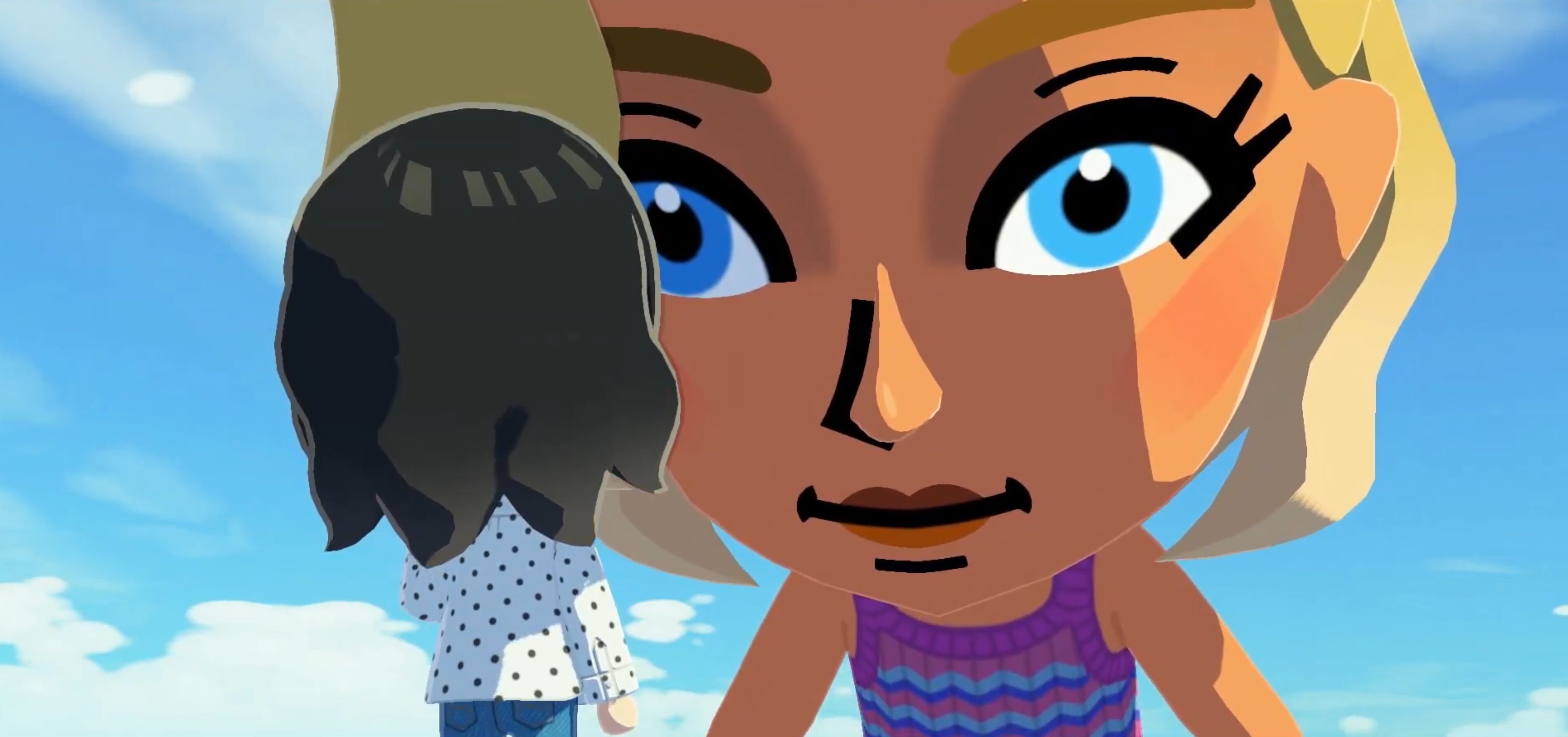
Fortunately, it does nonetheless appear like the sport will likely be delightfully foolish. One of many cutscenes already launched exhibits a lady Mii sitting on the ground shocked whereas an infinite pile of SNES Tremendous Scope mild weapons pours on prime of her, whereas one other exhibits a Mii operating down the road whereas an infinite 10-foot bowling ball rolls after them.
The entire thing appears set to be an completely bewildering expertise that may typically make no sense in any respect. Frankly, we wouldn’t have it another means.
Extra 2026 recreation previews:
