

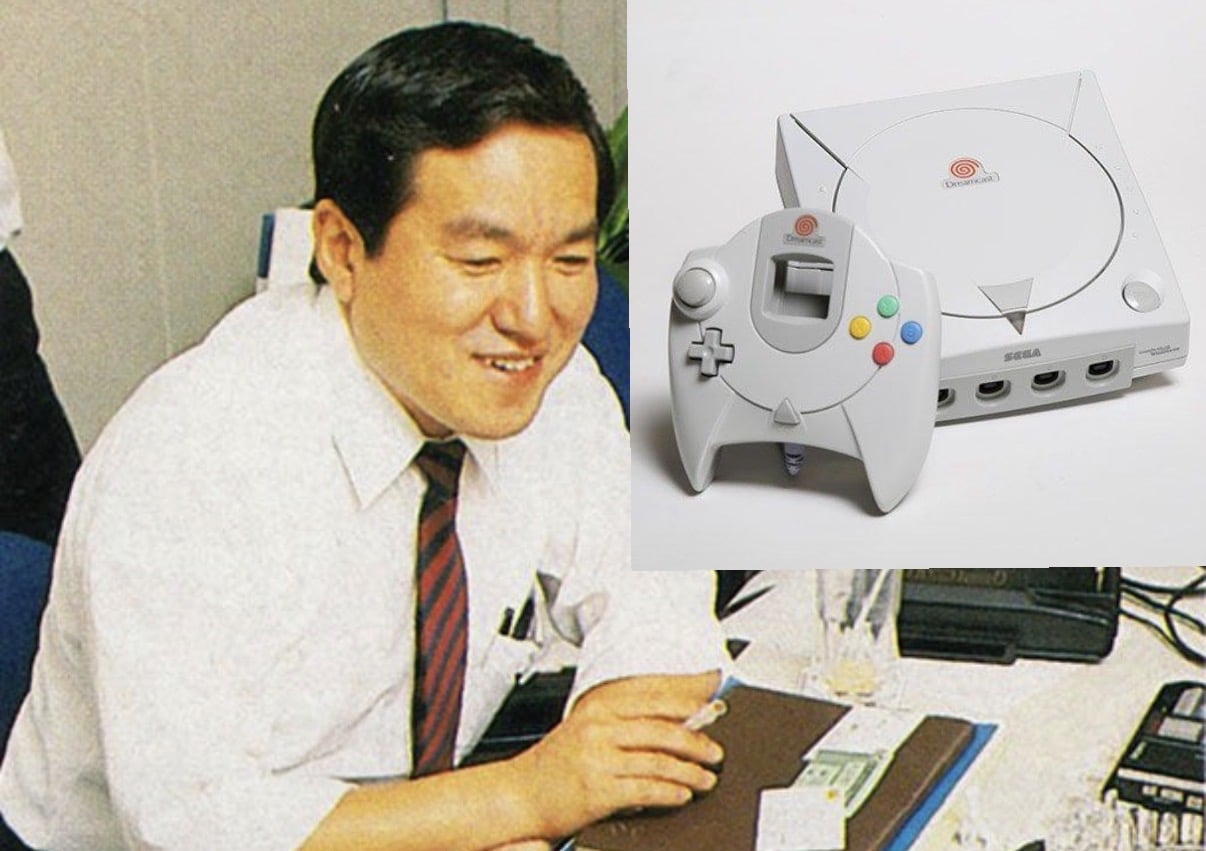

Hideki Sato, the designer behind nearly each Sega console, and the corporate’s former president, has died age 77.
Japanese video games outlet Beep21 stories that Sato handed away this weekend.
Sato and his R&D staff have been accountable for the creation of Sega’s arcade and residential console {hardware}, together with the Grasp System, Genesis / Mega Drive, Saturn, and Dreamcast.
The engineer joined Sega in 1971 and was the corporate’s performing president between 2001 and 2003. He left the corporate in 2008.
“From the start, Sega’s dwelling console growth has at all times been influenced by our arcade growth,” Sato beforehand informed Famitsu in an interview masking Sega’s historical past.
“Our first 8-bit machine was the SC-3000. This was a PC for beginner-level customers. At the moment, Sega solely did arcade video games, so this was our first problem. We had no thought what number of models we’d promote.”
Sato stated of Mega Drive, Sega’s most profitable console: “At that time, we determined to start out creating a brand new dwelling console. By then, arcade video games have been utilizing 16-bit CPUs.
“Arcade growth was one thing we have been very invested in, so we have been at all times utilizing essentially the most cutting-edge know-how there. Naturally, it began us considering: what if we used that know-how in a house console?
“Two years after we began growth, it was carried out: a 16-bit CPU dwelling console, the Megadrive. The 68000 chip had additionally just lately come down in value, so the timing was proper.”
On Dreamcast, the discharge that finally ended Sega’s run in {hardware}, Sato stated the key phrase for the event was “play and communication.”
“The last word type of communication is a direct reference to one other, and we included the modem and the linkable VMUs for that function,” he stated.
“We had additionally deliberate to have some kind of linking perform with cell telephones, however we weren’t capable of notice it. Customers have been now used to the raging ‘bit wars’, so regardless that we knew it was a variety of nonsense, we wanted to enchantment to them in these phrases with the Dreamcast.
“And so we marketed it as having a ‘128 bit graphics engine RISC CPU’, even the SH-4 was solely 64-bit. (laughs) Alternatively, we extensively custom-made the unique SH-4 for the Dreamcast, to the purpose the place I believe you can nearly name it one thing new.”
